
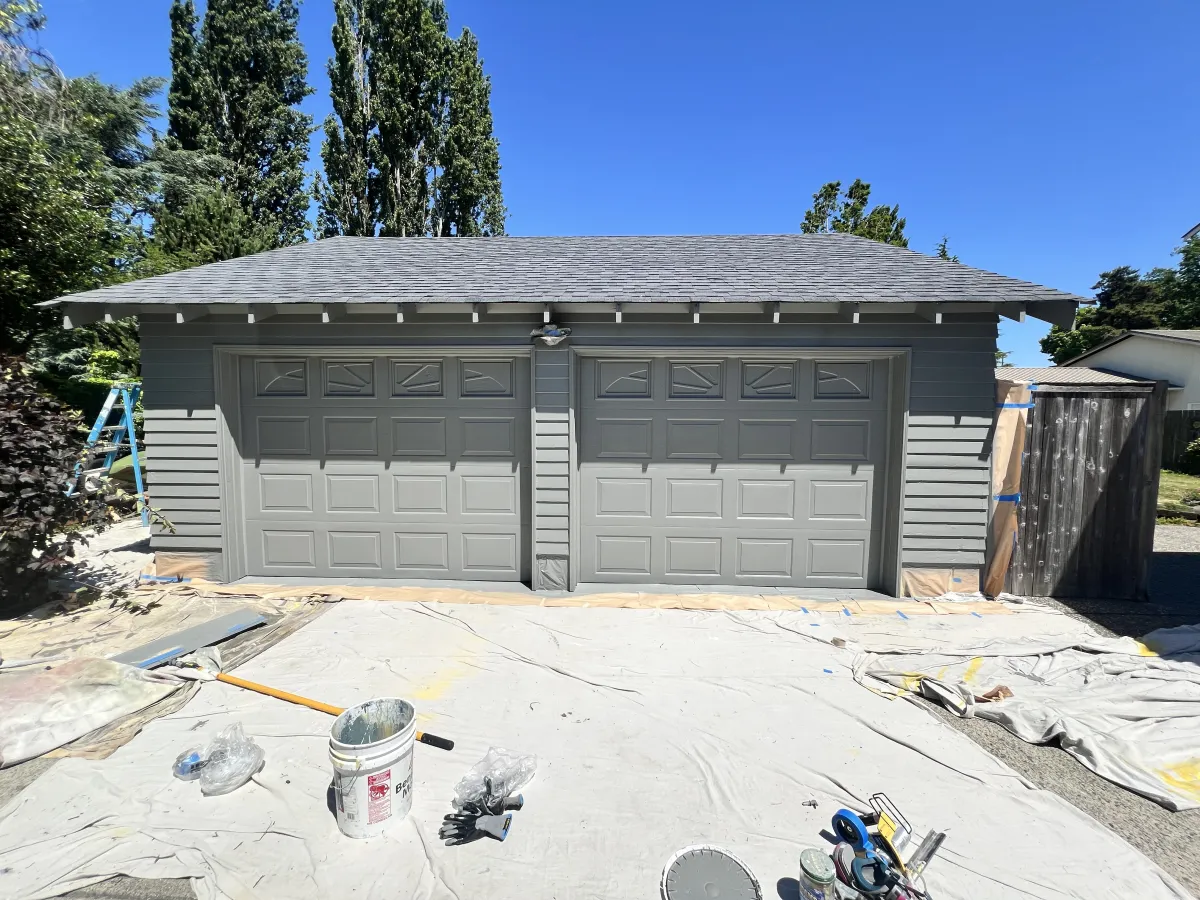
Why a Garage Door Is Harder to Paint Than It Looks
A garage door takes more abuse than almost any other surface on your home. It faces full sun and weather, flexes every time it opens and closes, collects road film and exhaust at street level, and — on the inside — deals with temperature swings and condensation. Paint that isn't prepped and primed for those conditions peels, chalks, and streaks within a season or two. The result you want comes almost entirely from what happens before the topcoat.
Sun & heat
South- and west-facing doors bake in summer. Dark colors on metal get hot enough to bubble a coating that wasn't applied to spec — so timing, film thickness, and the right product matter.
Constant movement
Panels and hinges flex on every cycle. The coating has to stay flexible and bonded so it doesn't crack at the seams and joints where the door articulates.
Grime & moisture
At driveway level a door collects road film, dust, and hand oils, and the back side sees condensation. Paint won't stick to any of that — degreasing and de-glossing come first.
Rust on steel
Older steel doors rust at the bottom edge and around dings. Rust has to be treated and primed with the right metal primer, or it bleeds back through and lifts the new finish.
Watch: Painting a Garage in Birchwood
Here's the actual Birchwood project from the photo above — prepped, masked, and refinished in place. This is what a properly run garage door repaint looks like start to finish.
Garage Doors We Paint
Every garage door material wants a different approach. We identify what yours is built from and match the prep and primer to it — this is the step most paint failures skip.
Steel doors
The most common door in Bellingham. We degrease, scuff-sand the factory finish, spot-treat rust, and prime bare or rusted areas with a direct-to-metal (DTM) or rust-inhibitive primer before a flexible exterior topcoat.
Aluminum doors
Aluminum doesn't rust, but its slick, often anodized surface needs proper de-glossing and a bonding primer so the new coating actually grips instead of peeling in sheets later.
Wood doors
Carriage-style and older wood doors get the same care as fine exterior trim — sanding, spot-priming bare wood, and a coating (or a breathable stain) chosen for how wood moves in our wet climate.
Faded & chalky doors
Sun-faded, chalking doors feel powdery to the touch. That chalk has to be washed and sanded off completely — paint applied over it has nothing to bond to and will fail fast.
Our Garage Door Painting Process
"We'll paint it" isn't a process. Here's the actual sequence we run on every garage door, and why each step is in it.
-
Clean & degrease
We wash the door to remove road film, dust, exhaust residue, and hand oils. At driveway level this buildup is invisible but real — and paint will not bond over it.
-
Sand, de-gloss & treat rust
We scuff the existing finish so the new coating can grip, sand out chalk and rough spots, and treat any rust on steel doors back to a sound, stable surface.
-
Mask & protect
Weatherstripping, hardware, glass, locks, and the surrounding trim get masked, and the driveway is covered. The door is painted in place — no removal needed — and stays operable.
-
Prime the right system
Bare metal, rust, raw wood, and slick aluminum each get the correct primer — bonding or direct-to-metal as the substrate calls for. The primer is where adhesion is won or lost.
-
Apply a durable exterior topcoat
We coat the panels, stiles, and edges evenly with a flexible exterior finish built to move with the door and hold color under sun and weather — working the door open and closed so nothing is missed.
-
Final check & cleanup
We pull masking, reinstall hardware, walk the finished door with you, and clean the site. The door works right away; we just advise gentle use while the coating fully cures.
Repaint, Don't Replace — When It Makes Sense
A new sectional garage door plus installation runs into the thousands. If your door is structurally sound and just looks dated, faded, or the wrong color, refinishing it captures most of that curb-appeal improvement for a small fraction of the cost.
- Worth painting: faded, chalky, or sun-bleached doors; builder almond or white you want to modernize; surface rust; a door that no longer matches updated trim or a new front door color.
- Better to replace: doors dented through the skin, rotted wood, or panels that are mechanically failing — we'll tell you honestly when that's the case instead of selling you paint that won't last.
- Best value of all: refinishing the garage door as part of a full exterior repaint — we're already on site, masked up, and matching your scheme.
What Bellingham Homeowners Say
★★★★★"We had Ellwanger Painting do a full exterior paint on our 10-year-old house in Bellingham that was starting to fade. Justin and the team were professional, took their time with the pre-cleaning and prep work, used quality paint, and made the house look like new again. I would not hesitate to use them again."
John AbelnExterior repaint · Bellingham, WA · via Google
Licensed, Lead-Safe & Local
Ellwanger Painting LLC is an owner-operated painting contractor based right here in Bellingham, painting homes across Whatcom County since 2004.
- WA Contractor License ELLWAPL779QL — bonded and insured, publicly verifiable through the Washington State Department of Labor & Industries.
- EPA RRP lead-safe certified for older homes — many garages on pre-1978 Bellingham homes have lead paint, and we handle it correctly.
- 5-year workmanship warranty on our painting projects, garage doors included. Specific terms are spelled out in your written estimate.
- Serving Bellingham, Ferndale, Lynden, Fairhaven, Birch Bay, Blaine, and the rest of Whatcom County.
Garage Door Painting FAQs — Bellingham, WA
How much does it cost to paint a garage door in Bellingham?
It's quoted per door based on size, material, and condition — a single panel door is a small job, while a heavily rusted or faded double door takes more prep. In nearly every case it costs a fraction of replacing the door, and it's often bundled into a full exterior repaint at little added cost since we're already on site. You get a written number before any work starts. See our painting prices for how we approach estimates.
Can you paint a metal or steel garage door?
Yes — steel and aluminum doors are the most common doors we paint. The key is the right prep and primer: we clean and degrease the finish, scuff-sand for adhesion, treat any rust on steel doors, and prime with a bonding or direct-to-metal (DTM) primer before the topcoat. Skipping that is exactly why DIY garage door paint peels.
Will the paint peel off my garage door?
Not when it's prepped correctly. A garage door is a high-stress surface — full sun, daily flexing, road grime, and condensation. Paint fails when it's brushed straight over a glossy or dirty factory finish with no degreasing, sanding, or primer. We clean, de-gloss, prime the right system for the substrate, and apply a flexible exterior coating that moves with the door — backed by our 5-year workmanship warranty.
Do you have to remove the garage door to paint it?
No. We paint garage doors in place. We mask the weatherstripping, hardware, glass, and surrounding trim, protect the driveway, and work the door open and closed as needed to coat the panels, edges, and stiles evenly. The door stays operable through the project.
Can you paint my garage door a different color than it is now?
Yes. A color change is one of the most common reasons homeowners repaint a garage door — going from dated almond or builder white to a deeper, modern color that ties into the trim or front door. We can match your existing exterior scheme or help you pick a color that updates the whole front of the house.
Is it cheaper to paint or replace a garage door?
Painting, by a wide margin — as long as the door is structurally sound. A new sectional door plus installation runs into the thousands; refinishing a door that's faded, chalky, or the wrong color is a small fraction of that and delivers most of the curb-appeal gain. If a door is dented through, rotted, or mechanically failing, replacement is the better call, and we'll tell you that honestly.
How long does it take, and when can I use the door again?
Most garage doors are a one-day job for the painting itself, though prep on a rusted or heavily weathered door can add time. The door is operable right away; we just advise gentle use while the coating fully cures over the following days, and we schedule around Bellingham weather so it isn't coated in damp or freezing conditions that hurt adhesion.
Do you paint garage doors as part of a full exterior repaint?
Yes, and that's often the best value. When we're already prepping and painting the siding, trim, and fascia, refinishing the garage door in the same scheme ties the whole exterior together for very little added cost. We also take standalone garage door jobs when that's all you need. Learn more about our exterior house painting.